Category: Uncategorized

  • How to Know If Your Tarot Reading Is Accurate

    There is a quiet moment that happens after a tarot reading — a pause, almost like a breath held in the dark — when you ask yourself, Was that real? Did the cards truly reflect something meaningful, or did you simply see what you wanted to see? It is one of the most natural questions a person can ask after sitting with the tarot, especially in the beginning, when the language of the cards still feels mysterious and new.

    The truth is that an accurate tarot reading does not always announce itself in loud, dramatic ways. It does not always arrive with instant certainty or a cinematic revelation. More often, accuracy in tarot feels subtle at first. It feels like a quiet recognition. A sentence lingers in your mind. A symbol keeps returning to you. A card seems to touch something you had not fully admitted to yourself, but knew was there all along. Tarot is not only about prediction. It is also about reflection, timing, emotional truth, and the hidden shape of a situation before it becomes obvious.

    If you have ever wondered whether your tarot reading was accurate, you are not doing anything wrong. In fact, that question can deepen your relationship with the cards. It invites you to move beyond fear or blind belief and into something much more powerful: trust built through experience, observation, and intuition. And that kind of trust is far more lasting than certainty borrowed from someone else.

    Tarot Accuracy Does Not Always Mean Immediate Proof

    One of the biggest misunderstandings about tarot is the idea that an accurate reading must be instantly verifiable. People often expect the cards to deliver a clean answer that can be confirmed within hours. Sometimes that happens. A reading may describe someone’s feelings with eerie precision, reveal the energy of a work situation before a conversation unfolds, or reflect your emotional state so clearly that it feels impossible to ignore. But not every accurate reading works that way.

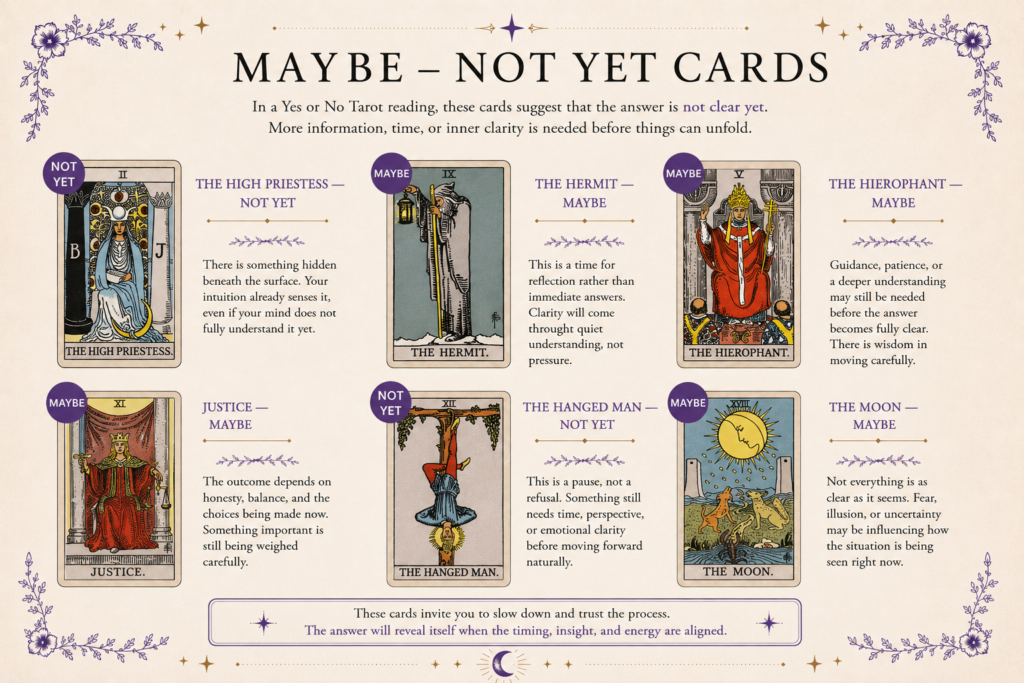
    Sometimes the cards are accurate because they reveal the emotional truth beneath the surface, even before outer events catch up. You may pull The Moon and feel disappointed because you wanted a clear yes, only to realize later that confusion, mixed signals, or hidden information really were shaping the situation. You may see The Hermit and think nothing is happening, only to understand days later that the delay itself was the answer. Tarot often speaks to the deeper pattern first. The visible proof may come after.

    This is why patience matters so much. A reading can be accurate even if you do not fully understand it in the moment. In fact, some of the most powerful readings only make complete sense with time. The cards do not always tell you what is easiest to hear. They tell you what is energetically present.

    The Feeling of Recognition Is Often the First Sign

    A truly accurate tarot reading often creates a feeling of recognition before it creates certainty. You may read the cards and feel something soften inside you. You may not be able to explain exactly why, but part of you knows the message matters. It touches a truth you were already circling, even if you had not yet put it into words.

    This recognition can feel gentle or uncomfortable. Sometimes accuracy feels reassuring, because the cards confirm what your heart already sensed. Other times it feels slightly unsettling, because the cards reveal something you were hoping to avoid. Either way, there is often a distinct emotional resonance. The reading does not feel random. It feels connected. It feels alive.

    This is especially true in love tarot readings, yes or no tarot readings, and deeply emotional questions. When a reading is accurate, it often reflects not just the external situation, but the emotional climate around it. The energy feels coherent. The cards seem to be in conversation with each other. The message may not be perfect in a literal sense, but it carries an inner truth.

    Accurate Tarot Readings Are Clearer When the Question Is Clear

    Sometimes the problem is not that the tarot reading is inaccurate. It is that the question was too tangled to begin with. Tarot responds best when you bring it sincerity and focus. If your question is overly broad, emotionally loaded, or secretly asking five things at once, the answer may feel blurred.
    For example, asking, Will everything in my love life work out? is so wide that the cards may respond with layered symbolism rather than a simple conclusion. But a question like, What is the energy around reconnecting with this person right now? gives the reading something more precise to hold. The clearer the question, the easier it is to sense whether the answer rings true.
    This matters especially in yes or no tarot. If the question is vague, the answer may feel vague. If the question is rooted in panic, the cards may reflect that emotional storm rather than the calm truth beneath it. A good reading begins before the cards are even pulled. It begins with honesty. It begins with asking what you truly want to know.

    Repeating the Same Question Can Disturb the Message

    Many people doubt a reading and then immediately ask the same question again, hoping for confirmation. This is understandable, especially when emotions are high. But repeating the same question too many times usually creates more confusion, not more accuracy. It becomes difficult to tell whether the cards are responding to the original situation or to your anxiety about it.

    When tarot is approached from a place of urgency, the message can become muddy. Not because the cards have failed, but because the energy around the reading has become crowded. Accuracy depends in part on presence. If you keep pulling because you do not like the answer, the problem is rarely with the tarot. It is usually that you are not ready to receive what was shown.

    A more grounded approach is to sit with the reading you already received. Write it down. Reflect on it. Let life move a little. Often the answer becomes clearer when you stop chasing it. Tarot responds beautifully to respect. The cards open more generously when they are treated as a mirror, not a machine.

    An Accurate Reading Usually Has Internal Consistency

    One of the most helpful ways to judge a tarot reading is to look for internal consistency. Do the cards seem to support the same emotional tone or message, even if they speak in different ways? Does the reading have a center of gravity? For example, if you pull The High Priestess, The Moon, and Seven of Cups, the exact details may vary, but the overall atmosphere suggests uncertainty, intuition, illusion, or hidden truth. That repetition of theme is meaningful.

    Accurate readings often have this quality. Even when the cards are complex, they echo one another. A story begins to form. The symbols are not random islands. They are threads in one fabric. This does not mean every reading must be tidy or easy. Sometimes a mixed reading is genuinely mixed because the situation itself is mixed. But even then, there is usually a pattern to the tension.

    When a reading feels accurate, it tends to hold together emotionally and symbolically. You may not decode every detail right away, but the message has shape. It feels intentional rather than scattered.

    Your Body Often Knows Before Your Mind Agrees

    Tarot is not only interpreted through logic. It is also felt. Sometimes your body responds to a reading before your rational mind catches up. You may feel calmer after receiving an answer that is true, even if it was not the answer you hoped for. Or you may feel a noticeable inner pause when a card lands on a hidden truth.

    This is one reason intuition matters so much in tarot. Accuracy is not always about proving the cards right in a courtroom sense. It is also about sensing when something has touched the deeper current of the moment. The body often recognizes this faster than the ego does. The mind wants evidence, control, neatness. The soul often recognizes truth in quieter ways.

    That does not mean every emotional reaction proves a reading is correct. Fear can distort. Wishful thinking can distort. But over time, you begin to notice the difference between emotional noise and inner recognition. One feels frantic. The other feels still, even when it is difficult.

    Tarot Is Most Accurate When You Are Grounded

    The state you are in when you do a reading matters more than many people realize. If you are exhausted, panicked, heartbroken, or obsessively attached to one outcome, your interpretation may become clouded. The cards may still hold truth, but it can be harder to hear them clearly through emotional static.

    This is why grounding rituals help. A few slow breaths. A candle. A moment of silence. A sincere intention. None of this needs to be elaborate. The purpose is not performance. It is presence. Tarot becomes more accurate when you are willing to meet it honestly, rather than demand certainty from it in a desperate mood.

    A grounded reading does not require you to be emotionless. It simply asks that you be present enough to listen. The more centered you are, the more easily you can tell the difference between what the cards are saying and what your fear is shouting over them.

    Accuracy Can Also Mean Guidance, Not Prediction

    Sometimes people judge tarot too narrowly. They think a reading is only accurate if it predicts a future event exactly as expected. But tarot often works in a more intimate, more intelligent way than that. It may not always tell you, This exact thing will happen on this exact day. Instead, it may show you the energy, the lesson, the opening, the caution, or the emotional truth surrounding a path.

    That is still accuracy. In many cases, it is the kind of accuracy that matters most.

    If a reading helps you see that you are idealizing someone, ignoring a red flag, forcing timing, or underestimating your own power, then the tarot has done something beautiful. It has told the truth in a way that can change how you move through your life. And often, that shift in awareness becomes part of what shapes the future itself.

    Tarot is not separate from you. It is in conversation with your energy, your choices, your intuition, and your timing. That is why accuracy in tarot is often dynamic rather than rigid. It reflects not only what is likely, but what is alive in the moment.

    How Time Reveals the Truth of a Reading

    One of the wisest things you can do after a tarot reading is keep a simple record of it. Write down the question, the cards, and your first impressions. Then come back later. This practice changes everything. It teaches you how your cards speak. It shows you which symbols repeat when certain themes are present. It helps you separate true intuitive hits from passing emotional projections.

    Over time, you begin to see that accurate tarot readings often reveal themselves in layers. What seemed vague on Monday may feel obvious by Friday. What felt disappointing in the moment may later seem protective. What felt confusing may turn out to have been honest all along.

    This is how trust with tarot is built. Not by forcing belief, but by witnessing the conversation unfold again and again. The cards become less like strangers and more like old companions who speak in symbol, timing, and gentle truth.

    So, How Do You Know If Your Tarot Reading Is Accurate?

    You know, first, by the feeling of recognition. You know by the way the message lingers. You know by the internal consistency of the cards, by the clarity of the question, and by the truth that reveals itself with time. You know by the subtle difference between panic and intuition. You know by staying open long enough to see whether the reading was reflecting deeper reality, even before outward proof appeared.

    And perhaps most importantly, you know by building your own relationship with the cards.

    Tarot was never meant to be approached only as a test of belief. It is a practice of listening. The more honestly you listen, the more clearly you begin to hear. Some readings will be immediately luminous. Others will unfold like moonlight on water, slowly, softly, in their own time. But when a reading is accurate, it leaves a trace. It stays with you. It opens something. It helps you see.

    That is not a small thing. That is the quiet magic of tarot.
  • The Moon Tarot Meaning (Confusion, Secrets, and Hidden Truths)

    There are certain tarot cards that arrive like a clear answer, and others that drift in like mist over still water. The Moon belongs to the second kind. When this card appears in a reading, it rarely speaks in a loud voice. Instead, it stirs a feeling. A suspicion. A quiet sense that something important is present, even if it cannot yet be fully named. The Moon is one of the most mysterious cards in the tarot, and perhaps one of the most misunderstood. People often fear it because it brings uncertainty, but The Moon does not appear to punish or confuse without reason. It appears when something is still hidden, still forming, or still waiting to be seen in the right light.

    In the Rider-Waite deck, The Moon is rich with dreamlike symbolism. The moon hangs above a winding path. A dog and a wolf lift their voices to the night. A crayfish rises from the water, moving slowly from the unconscious toward the visible world. Everything in this image suggests instinct, shadow, intuition, and the space between what is known and what is only sensed. This is why The Moon can feel so emotionally powerful in readings. It often appears when logic cannot give the full answer, when feelings are tangled, when truth is obscured, or when the heart knows something before the mind is ready to admit it.

    For those searching for the meaning of The Moon tarot card, the deeper question is usually not just “What does this card mean?” but rather “What am I not seeing yet?” That is the real doorway into The Moon. This card speaks of confusion, yes, but also of imagination, psychic sensitivity, emotional undercurrents, and the strange beauty of what is revealed slowly. It asks you not to force clarity before its time.

    The Moon Tarot Meaning

    At its core, The Moon represents uncertainty, illusion, hidden truths, and the powerful influence of the subconscious. It can suggest that the situation before you is not as simple as it appears. There may be missing information, emotional projection, misunderstandings, mixed signals, or fears coloring perception. Under The Moon, appearances can be deceptive. Things may be felt very strongly, but not yet understood clearly.

    And yet, this card is not only about deception. That interpretation is too narrow for a card this deep. The Moon also governs intuition, dreams, symbols, instinct, and the mysterious language of the inner world. Sometimes it appears because your rational mind is demanding certainty, while your deeper self is asking you to slow down and listen more carefully. The answer may not be available through analysis alone. It may arrive in the form of a feeling, a repeated sign, a shift in emotional tone, or a truth you sense before you can explain it.

    This is why The Moon can be both unsettling and sacred. It asks you to walk through uncertainty without immediately trying to conquer it. It asks for patience with mystery. It does not promise instant clarity, but it often leads to a more honest one.

    The Moon in Love

    In love readings, The Moon can be especially intense. Matters of the heart are already full of longing, hope, vulnerability, and imagination, so when this card appears, emotions may feel even more heightened. Sometimes The Moon suggests that feelings are real but unclear. Other times, it points to confusion, emotional distance, secrecy, romantic projection, or uncertainty about where a connection truly stands.

    If you are asking about love, The Moon often appears when something is still hidden beneath the surface. One person may not be expressing their feelings openly. There may be mixed signals, unspoken fears, or a gap between what is shown and what is felt. It can also suggest that you are picking up on subtle emotional truths, even if you do not yet have proof. This card does not always mean deception in the dramatic sense, but it does suggest that all is not fully revealed.

    The emotional atmosphere of The Moon in love is delicate. A connection may feel magnetic and confusing at the same time. You may feel strongly drawn to someone, yet uncertain whether that pull is intuition, fantasy, chemistry, or anxiety. This is why The Moon asks for gentleness and caution. Do not rush to define what has not yet shown its full shape. Let actions speak. Let patterns reveal themselves. Let truth rise gradually from the emotional waters.

    The Moon as Feelings

    When The Moon appears as someone’s feelings, it often suggests emotions that are deep but difficult to understand or express. This person may feel strongly, but they may also be confused, guarded, overwhelmed, or afraid of what those feelings mean. Their emotions may shift, fluctuate, or remain partly hidden, even from themselves. There can be attraction here, longing here, and genuine emotional movement here, but very little certainty.

    In some cases, The Moon as feelings indicates someone who is holding back, either because they are not ready to be honest or because they are struggling to make sense of what they feel. They may be intuitive, sensitive, and emotionally affected by you, but not emotionally transparent. This can create that strange Moon-like dynamic where the bond feels significant, yet difficult to grasp.

    If you receive this card for someone’s feelings, it is wise not to build your entire interpretation on emotion alone. The card suggests there is more beneath the surface, but not all of it is trustworthy in its current form. Some of it may be real love. Some of it may be fear, fantasy, or projection. Time is often the missing piece.

    The Moon in a Relationship

    Within an existing relationship, The Moon can suggest emotional confusion, misunderstandings, hidden tension, or fears that have not yet been spoken aloud. A couple may care for one another deeply, but still be moving through a period where clarity is lacking. Communication may feel uncertain. One or both people may be withdrawing emotionally, avoiding a truth, or sensing that something unspoken is shaping the connection.

    This card can also arise when a relationship has drifted into ambiguity. Perhaps the emotional bond is real, but insecurities, old wounds, or mixed intentions are clouding the way forward. In some cases, The Moon points to secrets or avoidance. In others, it points to vulnerability that has not yet found language. What matters most is that the card asks for honesty without aggression, truth without panic, and patience without self-deception.

    The Moon does not tell you to ignore your instincts. Quite the opposite. It asks you to listen to them carefully, but also to distinguish instinct from fear. If something feels off, there may indeed be more to uncover. But clarity should come through observation, not emotional spiraling.

    The Moon Reversed

    When The Moon appears reversed, the energy begins to shift. Something that was hidden may be coming into view. Fog may be lifting. A truth may be surfacing after a long period of uncertainty. In this sense, The Moon reversed can be a welcome card, especially if you have felt lost, confused, or emotionally trapped. It often suggests that illusion is weakening and reality is beginning to show itself.

    At times, The Moon reversed indicates that fears have been exaggerated and are finally losing their grip. What once felt overwhelming may now seem more manageable. You may be seeing the situation more clearly, or realizing that some of what frightened you came from old anxieties rather than present facts. This can be a healing turn.

    However, The Moon reversed is not always comfortable. Sometimes clarity arrives through exposure. Secrets may emerge. Self-deception may become harder to maintain. Emotional truths that were buried may rise all at once. If upright Moon feels like wandering in the dark, reversed Moon can feel like the moment dawn reveals what the night was hiding. That light is important, even when it is not easy.

    The Moon Reversed in Love

    In love readings, The Moon reversed often suggests that hidden dynamics in the relationship are being brought into the open. This can mean a misunderstanding is finally being clarified, a person is becoming more emotionally honest, or a romantic illusion is beginning to break. If you have felt uncertain about someone’s intentions, this card may indicate that you will not remain in the dark forever.

    Sometimes this brings relief. A relationship may become more truthful, more grounded, and easier to understand. Emotional confusion may lessen. Communication may improve. What once felt vague may start to feel more real. In other situations, however, The Moon reversed reveals that what you hoped for was never fully supported by reality. This can be painful, but it is ultimately cleansing. Clarity may hurt in the moment, yet it frees the heart from wandering in circles.

    If you ask about a relationship and receive The Moon reversed, pay close attention to what is being revealed. What patterns have repeated? What intuition have you ignored? What truth is asking not to be softened anymore? This card often comes when emotional honesty is overdue.

    Does The Moon Mean Deception?

    Sometimes, yes — but not always in the dramatic or obvious way people assume. The Moon can point to hidden motives, half-truths, emotional avoidance, or confusing behavior. But deception under The Moon can also be quieter. A person may be deceiving themselves. They may be pretending not to feel something, pretending to feel more than they do, or staying in a situation they know is not clear because fantasy feels safer than truth.

    The card can also reflect projection. You may not be seeing another person clearly because longing, fear, or uncertainty is coloring the picture. This is why The Moon is such an important card in emotional readings. It reminds us that not every feeling is a fact, and not every intense connection is immediately trustworthy. Some are real. Some are unfinished. Some are mirrors.

    The lesson of The Moon is not to become suspicious of everything. It is to move with discernment. Let mystery remain mystery until it has earned a clearer name.

    Other Tarot Cards That Deepen the Meaning of The Moon

    The Moon becomes even more revealing when read alongside other cards. These combinations often help clarify whether the card is speaking more about intuition, confusion, illusion, emotional depth, or hidden truths.

    When The Moon appears with The High Priestess, the reading becomes deeply intuitive and spiritually charged. This pairing often suggests inner knowing, psychic sensitivity, dream messages, and truths that are felt before they are spoken. There may still be mystery, but it is a meaningful mystery, one that asks for quiet trust rather than fear.

    When The Moon appears with The Lovers, emotions may be strong, but clarity may be weak. This combination can point to romantic confusion, idealization, hidden feelings, or a connection that feels fated yet emotionally uncertain. Attraction may be real, but the emotional path is not fully illuminated.

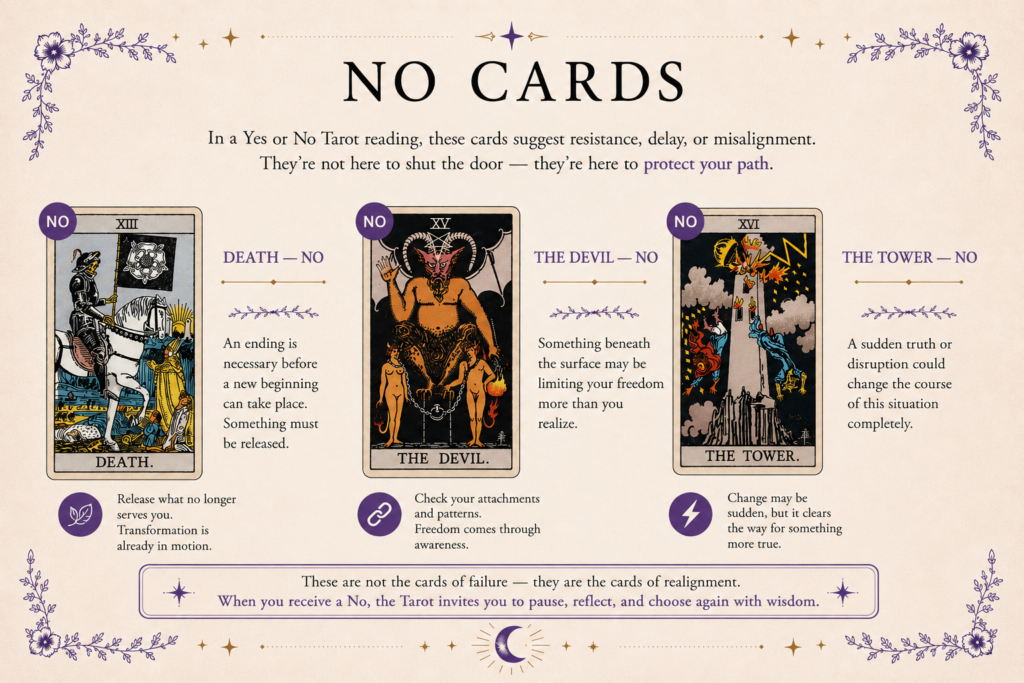
    When The Moon is paired with The Devil, the energy becomes heavier and more complex. There may be obsession, temptation, emotional entanglement, fear-based attachment, or a bond that is difficult to see clearly because desire is clouding discernment. This combination can be magnetic, but it asks for extreme honesty.

    When Seven of Cups appears with The Moon, illusion is strongly emphasized. Fantasy, projection, wishful thinking, or too many emotional possibilities may be making it difficult to know what is real. This pairing often says: slow down, simplify, and do not mistake imagination for certainty.

    When The Moon appears with The Star, a gentler message comes through. There may still be confusion, but healing and guidance are close. This combination suggests that even if clarity is incomplete, hope is not lost. Trust can be rebuilt, and emotional truth can emerge in time.

    When The Hermit accompanies The Moon, introspection becomes essential. This pairing asks for reflection, solitude, and inner honesty. Answers may not come from external reassurance, but from deep personal truth. There is wisdom here, though it may require quiet to hear it.

    When The Moon appears with Judgement, something hidden may soon be revealed in a powerful way. A realization, confession, reckoning, or awakening may be approaching. The truth is rising. This combination often suggests that the period of ambiguity will not last forever.

    When Three of Swords joins The Moon, emotional pain, disappointment, or betrayal may be present. This can indicate heartbreak shaped by hidden truths, confusion, or difficult realizations. It is not a light combination, but it is an honest one.

    What The Moon Wants You to Know

    The Moon does not ask you to panic. It asks you to pause. It asks you to respect the fact that not everything is ready to be understood all at once. Some truths come quietly. Some answers arrive after the illusion has had time to dissolve. Some feelings must be observed before they can be trusted.

    If this card has found you, perhaps something in your life is asking to be felt more deeply before it can be named clearly. Perhaps your intuition has been speaking, but fear has been interrupting the message. Perhaps you already know that something is hidden, incomplete, or emotionally unsettled. The Moon does not always remove uncertainty right away, but it does validate the atmosphere of uncertainty. And sometimes that alone is a kind of wisdom.

    There is a tenderness to this card, even in its discomfort. It reminds you that uncertainty is not failure. Not knowing is not weakness. There are seasons of life when the soul moves by moonlight rather than daylight. In those seasons, gentleness matters. So does truth. So does patience.

    Final Thoughts on The Moon Tarot Meaning

    The Moon is one of tarot’s most hauntingly beautiful cards because it lives at the threshold between truth and illusion, feeling and fact, instinct and fear. It appears when something deeper is moving beneath the surface, when clarity has not fully arrived, and when emotional discernment matters more than quick conclusions.

    In love, The Moon can suggest hidden feelings, uncertainty, mixed signals, fantasy, emotional sensitivity, or quiet truths waiting to be revealed. Reversed, it often marks the beginning of clarity, the lifting of illusion, or the surfacing of what has been buried. In both positions, it asks you to move carefully and honestly.

    This is not a card of easy answers, but it is a card of meaningful ones. It teaches that intuition is powerful, but must be paired with patience. It teaches that mystery can hold wisdom, but should never become an excuse for self-deception. And above all, it reminds you that what is real will not fear the light forever.

  • The Lovers Tarot Meaning in Love (Is This True Love?)

    There are some tarot cards that feel like a whisper, and others that feel like a bell ringing in the heart. The Lovers is one of those cards. When it appears in a love reading, people often lean in a little closer, almost holding their breath, because something about this card feels deeply personal. It speaks to connection, attraction, desire, devotion, and the choices that shape the story of love. Yet The Lovers is far more layered than a simple promise of romance. It does not only ask whether love is present. It asks whether that love is true, aligned, mutual, and honest.

    In the Rider-Waite tarot, The Lovers is rich with symbolism that hints at innocence, vulnerability, spiritual union, and meaningful choice. This is why the card can feel so powerful in relationship readings. It does not describe shallow chemistry alone. It points to the kind of connection that reveals something essential about who you are, what you value, and what you are willing to choose when the heart is involved. When people search for the meaning of The Lovers tarot card in love, what they are often really asking is something much softer and much deeper: is this bond real, and can I trust what I feel?

    The answer, in many cases, is yes — but The Lovers always asks for sincerity. This is not a card of illusion or emotional games. It is a card of emotional truth, of openness, and of standing before love without hiding from it. If this card has appeared for you, it may be reflecting a relationship that is meaningful, magnetic, and transformative. It may also be asking whether both people are choosing each other clearly, not simply drifting together out of desire, longing, or convenience.

    The Lovers Tarot Meaning in Love

    In love readings, The Lovers often appears when there is genuine emotional or romantic potential. It is one of the strongest cards in the tarot for attraction and heartfelt connection. There is usually a sense of recognition here, as though two people are meeting not only physically or emotionally, but soulfully. This card can suggest a bond that feels important from the start, a relationship that awakens something, or a choice in love that carries long-term significance.

    At its most beautiful, The Lovers represents harmony between mind, body, and heart. It can indicate mutual affection, romantic openness, emotional vulnerability, and the willingness to build something meaningful together. If you are asking whether someone loves you, whether a connection is real, or whether a relationship has the potential to deepen, The Lovers is one of the most encouraging cards you can receive. It suggests that the feelings involved are not casual. There is tenderness here, but also consequence. Love is not merely happening; it is asking to be consciously chosen.

    This is part of what makes The Lovers so special in tarot love readings. Many people think of it as simply the “romance card,” but it is wiser than that. It understands that love is not only about desire or excitement. Love is also about alignment. Are your values compatible? Are both people showing up honestly? Is the connection helping each of you become more fully yourselves? The Lovers asks these questions gently, but it does ask them.

    Is The Lovers Always About True Love?

    Not always — and this is where the card becomes more interesting. The Lovers can absolutely point to true love, soulmate energy, or a deeply significant bond, but it does not guarantee a fairy tale without effort. It describes the potential for a beautiful union, but it also highlights the importance of free will. Love may be present, but what will be done with it is another matter.

    Sometimes The Lovers appears when someone is standing at an emotional crossroads. There may be two choices, two people, or two possible futures. In this sense, the card speaks not only of romance but of decision. A person may need to choose love over fear, honesty over avoidance, intimacy over self-protection, or a meaningful connection over a tempting distraction. So if you are asking, “Is this true love?” The Lovers may answer, “It can be — if it is chosen with honesty.”

    This card can also show up when the connection itself feels fated or deeply important, even if it is not effortless. Some relationships arrive to bless us. Others arrive to transform us. Some do both. The Lovers often appears when a relationship has the power to shape your emotional path in a lasting way, but the quality of that path depends on truth. Without truth, even strong attraction can become confused. With truth, this card can mark one of the most profound forms of love.

    The Lovers as Feelings

    When The Lovers appears as someone’s feelings for you, it usually points to sincere attraction and emotional openness. This person may feel drawn to you in a way that goes beyond surface interest. There is often admiration, desire, tenderness, and a feeling that the connection matters. In many cases, this person sees you as someone with whom a real bond is possible. Their feelings may be warm, romantic, and heartfelt.

    At the same time, The Lovers as feelings can also suggest inner conflict. The emotions are present, but the person may be aware that loving you means making a real choice. They may understand that this connection could change things. It may require vulnerability, commitment, or a level of honesty they are not used to giving. So while this card is generally very positive in love, it sometimes carries the quiet tremor of someone realizing that what they feel is serious.

    If you asked how someone feels and received The Lovers, it is rarely a sign of indifference. This card usually means that your presence is affecting them deeply. Whether they are ready to embrace that fully is something the surrounding cards will clarify, but the emotional significance is usually undeniable.

    The Lovers in a New Relationship

    In a new romance, The Lovers can feel almost magical. It often appears when there is chemistry that feels immediate, easy conversation, a sense of emotional recognition, or a growing bond that seems naturally promising. This card can suggest that the relationship is starting on strong ground, especially if both people are being authentic from the beginning.

    There is usually a sweetness to this energy. The connection may feel exciting, but it also feels meaningful. You may sense that this person mirrors something important in you, or that the relationship is unfolding with a rare kind of emotional clarity. If you are wondering whether to trust a new love, The Lovers is one of the cards that says your heart may not be imagining things.

    Still, this card gently reminds you not to get lost in idealization. Real love grows strongest when both people remain grounded in truth. Attraction is beautiful, but The Lovers asks for more than attraction. It asks for honest communication, shared values, and conscious intention. When these are present, the card becomes even more promising.

    The Lovers in an Established Relationship

    For couples, The Lovers can be a deeply affirming sign. It often points to emotional closeness, mutual affection, physical intimacy, and a strong sense of partnership. This is a card that can show two people who genuinely choose one another again and again, not because they have no challenges, but because the bond itself feels worth nurturing.

    In established relationships, The Lovers may also appear during important moments of decision. A couple may be discussing commitment, living together, marriage, reconciliation, or the future of the relationship. The card suggests that the emotional foundation is significant, but that the next step should be approached with truth and alignment. If both people are listening to the heart as well as to reality, the relationship may deepen beautifully.

    Sometimes The Lovers comes up when a couple needs to reconnect with what brought them together in the first place. Life can create noise, but this card brings attention back to the essence of the bond. It reminds both people that love is not maintained by habit alone. It is maintained by presence, by openness, and by the willingness to truly see one another.

    The Lovers Reversed in Love

    When The Lovers appears reversed in a love reading, the message becomes more delicate. The connection may still matter very much, but something is out of alignment. There may be confusion, emotional distance, avoidance, mixed values, fear of commitment, or a choice that has not been faced honestly. The reversed card does not always mean the love is false, but it does suggest that harmony has been interrupted.

    Sometimes The Lovers reversed appears when one person is not being fully truthful with themselves or with the other. There may be deep attraction, but the relationship is drifting without clarity. In other cases, this card points to disconnection within an existing partnership. Communication may be strained, trust may be wavering, or one or both people may feel torn between desire and doubt. The emotional thread is still there, but it needs care.

    In some readings, The Lovers reversed can point to indecision between two people or two paths in love. It may reflect a situation where someone is afraid to choose, unwilling to commit, or caught between what they want and what they believe they should do. There can also be a theme of self-abandonment here — saying yes to a relationship that does not truly honor the heart.

    Yet even reversed, this card is not without hope. It often appears not to close the door, but to ask for honesty. What is being avoided? What truth has not yet been spoken? What choice needs to be made with courage? The Lovers reversed invites healing through alignment. It asks whether the relationship can return to sincerity, and whether both people are willing to meet there.

    Does The Lovers Reversed Mean a Breakup?

    Not necessarily. It can sometimes appear around breakups, especially if a relationship has become imbalanced or if a painful decision must be made, but it is not automatically a card of ending. More often, it suggests tension around connection, choice, or emotional truth. There may still be love, but love alone may not be enough if the relationship is not being nurtured with honesty.

    In some cases, this card reversed shows a relationship that can be repaired, particularly if both people are willing to talk openly and take responsibility for what has been neglected. In other cases, it reveals that the deeper lesson is about choosing oneself, choosing clarity, or choosing a love that is healthier and more aligned. The surrounding cards matter greatly here, but the central theme remains the same: something essential must be faced.

    Other Tarot Cards That Deepen the Meaning of The Lovers

    The Lovers becomes even more revealing when read alongside certain other tarot cards. In love readings, combinations can tell you whether this connection is growing toward lasting partnership, drifting into confusion, or carrying lessons that need to be understood more clearly.

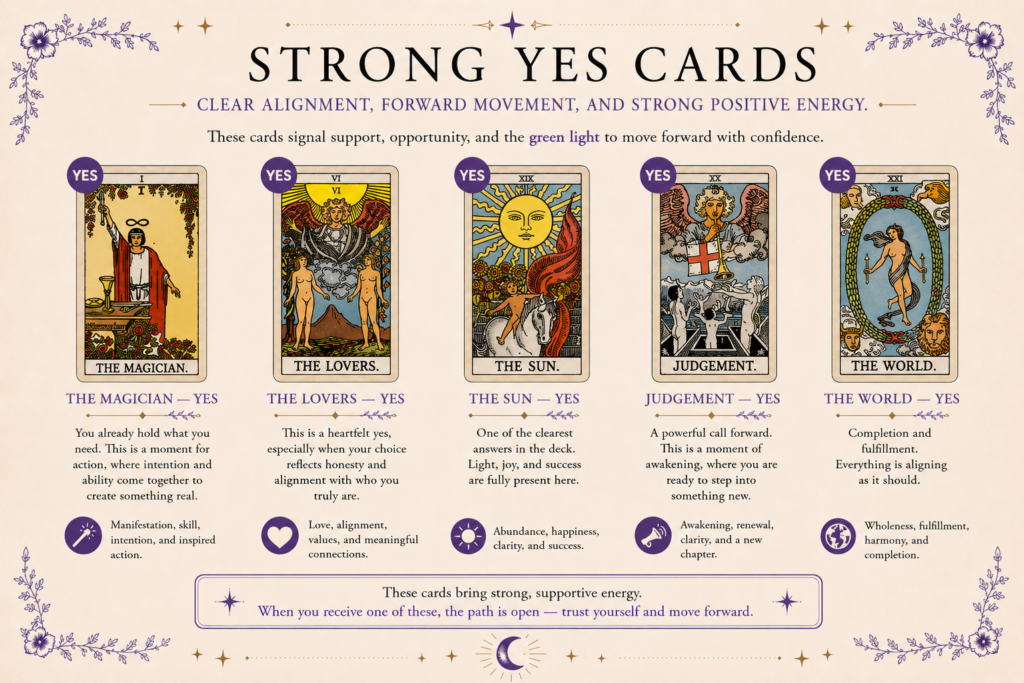
    When The Lovers appears with Two of Cups, the message is especially romantic. This pairing often points to mutual affection, emotional reciprocity, deep attraction, and the possibility of a loving union where both people genuinely meet each other. If you are asking about true love, this combination is one of the sweetest in the tarot.

    When The Lovers is paired with The Empress, the relationship often carries warmth, sensuality, affection, and emotional abundance. This can suggest a nurturing bond, fertile emotional ground, and a love that feels rich, comforting, and deeply alive. It often softens the reading and adds tenderness.

    When The Lovers appears with The Hierophant, the connection may be moving toward commitment, shared values, tradition, or even marriage. This pairing can indicate a serious relationship with long-term potential, especially when both people are emotionally mature and aligned in what they want.

    When The Devil appears with The Lovers, the reading becomes more complex. There may be strong chemistry and magnetic attraction, but also attachment, obsession, temptation, jealousy, or unhealthy patterns. This does not always mean the relationship is doomed, but it does suggest that desire and truth may not be perfectly balanced. The connection may be powerful, but it needs honesty and boundaries.

    When The Moon appears alongside The Lovers, emotions may be real, but clarity may be lacking. There can be confusion, projection, secrets, mixed signals, or fear shaping the relationship. This combination often asks you to move slowly and look beneath appearances before making emotional decisions.

    When Three of Swords joins The Lovers, heartbreak, separation, emotional pain, or a difficult truth may be part of the story. Sometimes this indicates love complicated by betrayal or an impossible choice. Other times, it shows a bond that matters deeply but is passing through grief or disappointment.

    When The Lovers appears with The Star, the energy becomes healing, hopeful, and spiritually luminous. This can be a beautiful sign for reconciliation, emotional renewal, or a relationship that helps restore faith in love. There is often a feeling of grace in this pairing.

    When Judgement appears with The Lovers, an important romantic decision is often approaching. A relationship may be returning for closure or renewal, or someone may be awakening to the truth of what they feel. This combination often carries karmic weight and asks for maturity.

    What The Lovers Wants You to Know About Love

    At its heart, The Lovers reminds us that love is not only something we feel. It is something we choose. We choose whether to tell the truth. We choose whether to remain emotionally available. We choose whether to move toward what is aligned or stay in what is easier. This is why the card feels so powerful. It is romantic, yes, but it is also sacred in its own quiet way. It asks the heart to be brave.

    If this card has found you, it may be because love is trying to show you something important. Perhaps it is showing you a bond worth honoring. Perhaps it is showing you where your heart longs for greater sincerity. Perhaps it is asking whether the relationship before you reflects your deepest values, or whether you have been settling for less than true alignment.

    When The Lovers appears, something in love wants to come into clearer focus. It is a beautiful card, but never a superficial one. It asks for honesty, tenderness, and the courage to choose what is real.

    Final Thoughts on The Lovers Tarot Meaning in Love

    So, is this true love? The Lovers says that it can be — but true love is not only recognized, it is chosen. This card brings warmth, attraction, and emotional significance, but also responsibility. It asks whether two people are meeting each other with openness, whether the connection is rooted in truth, and whether the path ahead is being shaped by conscious love rather than fantasy alone.

    In upright form, The Lovers is one of the most promising tarot cards for romance, intimacy, heartfelt connection, and soulful partnership. Reversed, it asks you to notice where alignment has been lost and where honesty is needed. In both positions, the lesson is profound. Love is strongest when it is real, mutual, and brave enough to be seen clearly.

    If you are building your tarot practice, The Lovers is a beautiful card to study deeply because it reveals so much about the emotional architecture of relationships. It does not only tell you whether love is present. It helps you understand the quality of that love, the choices surrounding it, and the truth your heart may already know.

  • How to Use Tarot for Self-Reflection and Clarity

    There are moments in life when nothing seems entirely wrong, and yet something inside you feels unsettled. You may be moving through your days, answering messages, making decisions, and doing everything you are supposed to do, but still carrying a quiet feeling that something needs your attention. It is often in moments like these that tarot becomes especially meaningful. Not because it predicts every detail of what will happen next, but because it helps you listen more honestly to what is already stirring within you.

    Tarot for self-reflection is not about giving your power away to the cards. It is about returning to yourself. Each card becomes a mirror, and each reading becomes a conversation between your conscious mind, your intuition, and the truth you may have been too busy or too overwhelmed to name. When approached with sincerity, tarot can offer clarity, emotional insight, and a sense of inner steadiness that feels almost like being guided back home.

    If you have ever wondered how to use tarot for clarity, for emotional insight, or simply to understand your own patterns more deeply, the good news is that you do not need to be an expert. You do not need elaborate rituals or rare spiritual gifts. You only need a quiet moment, a genuine question, and the willingness to be honest with yourself.

    Why Tarot Is So Powerful for Self-Reflection

    One of the reasons tarot is so powerful for personal growth is that it speaks in symbols, emotions, and archetypes rather than rigid instructions. Life is rarely simple, and your inner world is rarely linear. Tarot understands that. A card can reveal not only what you are feeling, but also what you are avoiding, what you are repeating, and what part of you is quietly asking to be seen.
    This is why tarot and self-discovery work so beautifully together. A reading may not tell you, “Do exactly this, on exactly this day,” but it can illuminate the emotional landscape beneath your choices. It can show where fear is speaking louder than desire. It can show where old wounds are shaping present decisions. It can show where hope still lives, even if you have almost forgotten how to trust it.
    In that way, tarot does not create wisdom for you. It reveals the wisdom that is already there, waiting beneath the surface.

    Using Tarot as a Mirror, Not a Shortcut

    When people first begin using tarot, they sometimes hope the cards will remove uncertainty completely. They want a clear answer, a final sign, a guarantee. And while tarot can absolutely bring direction, its deepest gift is often something gentler and more lasting. It helps you ask better questions. It helps you notice your emotional truth. It helps you understand why a certain situation feels so heavy, or why a certain dream keeps returning to your heart.

    Using tarot for self-reflection means allowing the cards to be a mirror rather than a shortcut. Instead of asking only, “What will happen?” you begin asking, “What am I meant to understand here?” Instead of asking, “Will I get what I want?” you may ask, “What energy am I bringing into this situation?” Those subtle changes matter. They open the door to clarity that is not based on control, but on consciousness.

    And that is where tarot becomes deeply healing. It moves you away from panic and into presence. It helps you stop chasing answers outside yourself and start listening to what your inner life has been trying to tell you all along.

    How to Prepare for a Tarot Reading for Clarity

    You do not need an elaborate setup to read tarot for clarity, but intention matters. The most important thing is to create a small pocket of calm around yourself, even if only for ten minutes. Put your phone aside. Take a breath. Light a candle if that helps you settle, or simply sit near a window where the light feels soft and peaceful. The point is not perfection. The point is presence.

    Before you shuffle the cards, take a moment to ask yourself what is truly on your heart. Often the first question that comes to mind is only the surface layer. Beneath “Should I stay or leave?” there may be “Why am I afraid to choose?” Beneath “Does this person care about me?” there may be “Why do I keep seeking certainty from people who confuse me?” Tarot responds beautifully when you are brave enough to reach for the deeper question.

    This is one of the simplest ways to use tarot for clarity: do not rush. Let yourself arrive emotionally before you begin.

    The Best Questions to Ask Tarot for Self-Reflection

    The quality of your reading often depends on the quality of your question. Questions for self-reflection are usually more open, more compassionate, and more revealing than questions that demand a yes or no. Instead of cornering the reading, they invite truth to unfold.

    A strong self-reflection question might sound like this: “What do I need to understand about my current emotional state?” Or, “What pattern am I being asked to release?” Or, “What energy is shaping this situation, and how can I respond with more wisdom?” These kinds of questions allow the cards to tell a fuller story. They invite nuance, emotional honesty, and insight that can stay with you long after the reading ends.

    If you are using tarot for personal growth, it can also help to ask, “What part of myself needs more compassion right now?” That question alone can open a very tender and revealing door.

    A Simple Tarot Spread for Self-Reflection and Clarity

    You do not need a complicated layout to receive a meaningful message. In fact, some of the most powerful readings come from the simplest spreads. A three-card tarot spread for self-reflection can be more than enough when you want to understand yourself more clearly.

    The first card can represent where you are now. This card often reveals your emotional state, your current energy, or the truth of the moment as it stands. The second card can show what is influencing you beneath the surface. This may point to a fear, a hope, a memory, or an unconscious pattern that is quietly shaping your experience. The third card can reveal what you are being invited to understand, heal, or embrace moving forward.

    This kind of tarot spread for clarity is especially helpful when you feel emotionally tangled. It gives structure to your inner world. It takes what feels vague and turns it into something you can gently hold, examine, and understand.

    How to Interpret the Cards Honestly

    One of the most beautiful things about tarot is also one of the most challenging: it asks for honesty. It is easy to interpret cards in the way you wish they meant. It is harder, and far more transformative, to sit with what they are actually showing you.

    If a card feels uncomfortable, pause before rejecting it. Ask yourself why it stings. Sometimes the cards reflect not only your situation, but your resistance to seeing it clearly. A card like The Moon, for instance, may not mean disaster. It may simply suggest that confusion, projection, or emotional fog is present. A card like The Hermit may not mean loneliness. It may be inviting you into needed reflection and inner truth.

    Tarot becomes much more meaningful when you stop asking, “Is this a good card or a bad card?” and begin asking, “What is this card revealing about my current experience?” That question shifts everything. It turns the reading into a living dialogue rather than a verdict.

    Tarot Journaling: Where the Real Clarity Deepens

    If you want to use tarot for self-reflection in a truly lasting way, journaling is one of the best practices you can adopt. After a reading, write down the cards you pulled, the question you asked, and your first emotional response. Then go a little deeper. What in the reading felt immediately true? What surprised you? What discomfort appeared? What do you think the cards are asking you to notice?

    Tarot journaling helps transform a single reading into an ongoing relationship with your inner world. Over time, you begin to see patterns. You notice which cards appear when you are overthinking, when you are afraid, when you are ready to grow, or when you are being asked to trust yourself more fully. You start recognizing the language of your own soul.

    And perhaps most importantly, journaling keeps the reading from floating away like a passing mood. It grounds the insight. It allows clarity to deepen slowly, the way moonlight gradually reveals the shape of a path.

    When Tarot Can Help Most

    Tarot is especially helpful when you are standing at a crossroads, feeling emotionally overwhelmed, or sensing that something within you wants to shift. It can support you during moments of heartbreak, uncertainty, creative stagnation, or quiet reinvention. It can help when your mind is too loud and your feelings are too tangled to sort through alone.

    But tarot does not need a crisis to be meaningful. Some of the most nourishing readings happen in ordinary seasons of life, when you simply want to reconnect with yourself. A morning card pull can help you understand the emotional tone of the day. A weekly reading can help you notice what lesson is unfolding beneath everyday events. A monthly spread can help you step back and see the bigger pattern with more grace and perspective.

    Tarot for clarity is not only for dramatic turning points. It can also be a soft ritual of self-awareness, a way of staying emotionally awake to your own life.

    What Tarot Can and Cannot Do

    Tarot can illuminate, encourage, reveal, and gently challenge. It can help you find language for something your heart already knows. It can show you where your energy is blocked, where your truth is waiting, and where your next step may ask for courage. It can offer perspective when your emotions are too close to the surface to read clearly on your own.

    What tarot cannot do is live your life for you. It cannot replace your judgment, your responsibility, or your inner authority. The healthiest relationship with tarot is one in which the cards support your intuition rather than overpower it. They are a sacred tool, yes, but they are still a tool. The wisdom they awaken matters most when you carry it into your real choices, your real conversations, and your real healing.

    That balance is where clarity becomes empowering instead of dependent.

    Building a Personal Tarot Ritual

    If you feel called to use tarot more regularly, let it become something personal and gentle rather than rigid. You may choose to pull one card each morning and ask, “What energy am I being invited to notice today?” Or perhaps each Sunday evening, you sit with a cup of tea and ask the cards what emotional lesson the week is bringing. There is no single perfect method. The most meaningful ritual is the one that feels natural enough to sustain.

    Over time, this practice creates trust. Not only trust in the cards, but trust in yourself. You begin to notice that you can hold uncertainty without immediately collapsing into fear. You begin to understand your own emotional cycles with greater tenderness. You begin to feel less lost inside your own life.
    That is the quiet magic of tarot. It does not always arrive with thunder.

    Sometimes it arrives like a whisper, helping you understand one true thing at a time.

    Final Thoughts on Tarot for Self-Reflection and Clarity

    Learning how to use tarot for self-reflection and clarity is, in many ways, learning how to sit with yourself more honestly. It is learning how to ask deeper questions, how to listen beyond the noise, and how to trust that insight does not always come in a rush. Sometimes it comes card by card, image by image, truth by truth.

    If you approach tarot with openness rather than pressure, you may find that the answers you seek are not as far away as they seemed. They may already be within you, waiting for a symbol, a pause, or a quiet moment of courage to come into focus.

    Tarot will not make you perfect, and it will not remove every uncertainty from your path. But it can help you see yourself more clearly. And often, that is where real clarity begins.

  • The Most Positive Tarot Cards (And What They Mean for Your Future)

    There are certain tarot cards that seem to arrive like sunlight through a window. You turn them over, and something inside you softens. Even before you fully understand the message, you feel it. A little more hope. A little more peace. A little more trust in what is unfolding.

    The tarot is not only a tool for warning, reflection, or difficult truths. It is also a mirror for blessings. It shows us where life is opening, where love is ripening, where abundance is trying to find its way to us. Some cards carry especially uplifting energy, and when they appear, they often bring reassurance that you are moving toward something meaningful, beautiful, and aligned.

    If you have ever wondered which are the most positive tarot cards, this guide will help you recognize them and understand what they may be saying about your future. Whether your question is about love, career, healing, or personal growth, these cards often point to momentum, clarity, joy, and divine timing.

    The Sun: joy, success, and clear blessings

    Few cards in tarot are as openly radiant as The Sun. This is one of the happiest cards in the deck, and it tends to appear when life is ready to become simpler, brighter, and more honest. The Sun does not whisper. It shines. It reveals. It warms what was once uncertain.

    When The Sun appears in a reading about your future, it often suggests success, confidence, vitality, and a season of emotional renewal. Things that felt delayed or hidden may finally come into full view. In love, it can point to warmth, openness, and genuine happiness. In career matters, it often suggests recognition, progress, and a path that feels lighter after a period of confusion.

    There is also something deeply healing about this card. The Sun reminds you that not every chapter is meant to be heavy. Some are meant to restore your spirit. Some are meant to show you that happiness is not only possible, but already approaching.

    The Star: hope, healing, and a beautiful new chapter

    If The Sun is joy made visible, The Star is hope made sacred. This card often appears after difficulty, as though the soul has walked through darkness and finally found a quiet sky again. The Star is gentle, but it is profoundly positive. It speaks of healing, faith, inner peace, and the return of trust.

    When The Star shows up in a tarot reading about the future, it often means that life is moving toward emotional restoration. A difficult phase may be ending. You may be entering a period where clarity returns, intuition deepens, and your heart begins to believe in good things again. In love, this card can suggest emotional honesty, tenderness, and the possibility of a connection that feels spiritually aligned. In life more broadly, it often points to inspiration, calm guidance, and blessings that arrive softly but surely.

    The Star does not usually promise fast drama or loud victories. Its promise is more elegant than that. It tells you that what is meant for you is not lost, and that your future may hold more peace than you can currently imagine.

    The Empress: abundance, love, and fertile possibilities

    The Empress is one of the most nurturing and abundant cards in the tarot. She carries the energy of growth, beauty, sensuality, comfort, and creation. Wherever she appears, something wants to bloom.

    In future readings, The Empress often indicates abundance in many forms. This can be emotional abundance, financial improvement, creative fertility, or the deepening of love. She suggests that conditions are becoming more favorable, and that what you have been tending with care may soon begin to flourish. In romantic readings, she can represent affection, devotion, attraction, and a relationship that feels nourishing rather than draining. In career or money readings, she often reflects prosperity, support, and opportunities that feel aligned with your natural gifts.

    The beauty of The Empress is that she reminds you that receiving is also part of the journey. Not everything must be forced. Some blessings arrive because you are finally ready to let life be generous with you.

    Wheel of Fortune: luck, movement, and divine timing

    There are moments in life when everything begins to shift, almost as if an invisible hand has turned the page for you. That is the feeling of Wheel of Fortune. This is one of the most positive tarot cards when it appears in a future reading, especially if you have been feeling stuck.

    Wheel of Fortune suggests change, momentum, destiny, and favorable timing. Circumstances may begin to move quickly. A door may open unexpectedly. A long delay may suddenly resolve. This card often shows that life is no longer standing still, and that the next chapter may bring opportunities you could not have fully planned for.

    In love, this card can indicate an unexpected but meaningful turn of events. In work and finances, it may point to improvement, lucky breaks, or a period where external conditions become more supportive. There is often a feeling here that the universe is rearranging something in your favor.

    What makes Wheel of Fortune so uplifting is that it reminds you that your current situation is not permanent. Energy changes. Cycles turn. And sometimes, the future improves not because you push harder, but because the timing finally becomes right.

    Ace of Cups: emotional renewal and heart-opening blessings

    The Ace of Cups is a lovely omen in nearly any reading, but especially when the question concerns your emotional future. It is the card of new love, heartfelt connection, spiritual openness, and the kind of feeling that overflows naturally.

    When this card appears, it often signals a new beginning of the heart. This may mean a romantic opportunity, a deep emotional conversation, reconciliation, or simply a return to emotional wholeness within yourself. It is a card of softness, and yet it can be life-changing. The Ace of Cups suggests that your future may hold healing, affection, vulnerability, and a greater capacity to receive love without fear.

    In creative or spiritual readings, this card can also indicate inspiration, intuitive expansion, and emotional alignment. Something begins to flow again. Something that once felt closed starts to open.

    There is a tenderness to this card that feels almost holy. It reminds you that not all transformation comes through struggle. Some transformation arrives through kindness, grace, and the courage to feel.

    Ten of Cups: emotional fulfillment and lasting happiness

    If you are looking for one of the clearest signs of happiness in tarot, Ten of Cups is surely one of them. This card is often associated with emotional fulfillment, loving relationships, harmony, and the deep contentment that comes when life feels emotionally whole.

    In readings about the future, Ten of Cups can point to lasting love, family joy, reconciliation, peace in the home, or simply the feeling that your heart is no longer searching so desperately for what it needs. It suggests alignment not only in romance, but in your inner life. The future this card hints at is not fleeting excitement. It is the sweeter promise of emotional stability and soul-level satisfaction.

    For those asking about relationships, this is one of the most hopeful cards you can receive. It often suggests mutual love, long-term potential, and the kind of connection that supports your emotional well-being. In a broader sense, it may indicate that you are moving toward a life that feels more meaningful, connected, and emotionally rich.

    Ten of Cups is a beautiful reminder that happiness is not a fantasy reserved for other people. It can be part of your story too.

    The World: completion, success, and entering a new level of life

    The World is one of the most powerful positive tarot cards because it suggests fulfillment. Something has come full circle. A lesson has been integrated. A chapter is ending, but in the most graceful and rewarding way.

    When The World appears in a future reading, it often signals success, completion, expansion, and a new stage of maturity. You may be reaching a goal, closing an important cycle, or stepping into a more whole version of yourself. This card often appears when the future is asking you not to go backward, but to rise into what you have now earned through experience.

    In love, it can suggest a relationship reaching a more complete and secure phase. In career, it may point to achievement, recognition, travel, or expansion into something broader. Spiritually, it is a card of integration. You are becoming someone who can hold more, understand more, and live with greater alignment.

    The World is positive not simply because it promises good things, but because it confirms growth. It tells you that the journey has meaning, and that your future may carry a deep sense of arrival.

    Why positive tarot cards matter in a reading

    It is easy to think of tarot only as a system for predicting outcomes, but tarot also helps us understand energy. Positive tarot cards matter because they reveal where life is opening. They show where support exists, where healing is possible, and where the path ahead may be more promising than fear would have you believe.

    They do not always mean that everything will be effortless. Even the brightest cards do not erase the reality of human experience. But they do offer reassurance. They tell you that joy, love, abundance, healing, and movement are real possibilities. They help you see that the future is not always a place of uncertainty. Sometimes it is a place of blessing.

    And perhaps that is why these cards feel so special when they appear. They do not merely predict. They restore faith.

    What the most positive tarot cards mean for your future

    When cards like The Sun, The Star, The Empress, Wheel of Fortune, Ace of Cups, Ten of Cups, and The World appear in your reading, the message is often simple in the most beautiful way: life may be moving in your favor. Your future may hold more light than you think. More love than you expected. More ease than you have recently allowed yourself to imagine.

    Some of these cards promise joy. Others promise healing. Others suggest abundance, fulfillment, or the return of hope. But together, they remind you of something essential: the tarot does not only speak of obstacles. It also speaks of grace.

    So if one of these cards appears for you, receive it. Let it soften your fear. Let it widen your perspective. Let it remind you that good things are not only possible, but sometimes already on their way.

  • 5 Tarot Cards That Mean Love (And What They Really Say About Your Relationship)

    Love has a way of making everything feel brighter, softer, and somehow more mysterious at the same time. When you ask the tarot about love, you are rarely asking only, “Does this person love me?” More often, what your heart truly wants to know is whether the connection is real, whether it can grow, whether it is safe to trust, and whether it is leading you toward something meaningful. Tarot has a beautiful way of answering those deeper questions. It does not simply flatter your hopes. It reveals the emotional truth underneath them.

    There are certain tarot cards that readers immediately associate with romance, attraction, partnership, and emotional closeness. Yet love in tarot is never one-dimensional. A card that looks sweet at first glance may also speak of vulnerability, hard choices, healing, or timing. That is why understanding what these cards really mean in a relationship reading matters so much. A “love card” is not always promising a fairytale. Sometimes it is showing you what kind of love is present, what that love requires, and whether it is ready to bloom.

    If you have ever searched for tarot cards that mean love, cards that indicate romance, or signs of true love in a tarot reading, you are certainly not alone. These are some of the most beloved questions in tarot, and for good reason. Love touches everything. It changes how we move through the world, how we see ourselves, and how much courage we are willing to have. Let’s look closely at five of the most powerful tarot cards for love and what they are truly saying about your relationship.

    The Lovers — love, alignment, and heartfelt choice

    No card is more famously linked to love than The Lovers, and at first glance, it seems obvious why. This card radiates connection, attraction, chemistry, and emotional openness. In a relationship reading, The Lovers is often a beautiful sign that two people are drawn to one another in a sincere and meaningful way. There is warmth here, recognition, and the feeling that something important is being awakened between you.

    But The Lovers carries a deeper message than romance alone. This card is also about alignment. It asks whether the relationship reflects your true values, your emotional honesty, and the version of yourself you most want to become. In other words, it does not merely ask, “Is there love?” It asks, “Is this love in harmony with your soul?”

    When The Lovers appears, it can signal a bond with real potential, especially when both people are willing to be emotionally transparent. If you are already in a relationship, this card may suggest that an important choice or conversation is bringing the connection to a deeper level. If you are asking about someone new, it can point to mutual attraction and genuine possibility. Still, The Lovers reminds you that love thrives when it is chosen consciously, not simply desired intensely.

    Two of Cups — mutual affection and emotional reciprocity

    If The Lovers speaks of soulful alignment, the Two of Cups speaks of mutual feeling. This is one of the clearest tarot cards for emotional reciprocity, attraction, and partnership. When it appears in a love reading, it often suggests that the connection is not one-sided. There is interest flowing both ways. There is tenderness, emotional exchange, and a willingness to meet one another in the middle.

    The beauty of the Two of Cups lies in its balance. This is not a card of obsession, confusion, or mixed signals. It is a card of shared emotion. In practical terms, it may point to a relationship beginning naturally, a reconciliation rooted in genuine feeling, or a partnership growing stronger through mutual care and understanding. It is one of the loveliest signs that both people are emotionally present.

    Even so, the Two of Cups is gentle rather than dramatic. It does not usually shout. It invites. Its message is that love can be simple in the most healing way. If this card appears, your relationship may be showing signs of real emotional harmony. Someone may be ready to connect honestly, to soften their defenses, or to acknowledge feelings that have quietly been growing over time. In many readings, this card suggests that love is not only possible here — it is being returned.

    The Empress — affection, sensuality, and love that grows

    The Empress is one of the most nurturing and magnetically feminine cards in the tarot. In love readings, she often represents affection, sensuality, emotional abundance, and the natural growth of a relationship. This card carries a warm, fertile energy. It suggests that love is not being forced. It is being cultivated. It is unfolding in an atmosphere where feelings can deepen and connection can flourish.

    When The Empress appears, there is usually a sense of softness around the situation. This can be a card of romance, devotion, physical attraction, emotional generosity, and feeling cherished. In an existing relationship, it may point to a period of closeness, comfort, and renewed affection. In newer connections, it can be a sign that the bond has real potential to become something meaningful and secure.

    Yet The Empress does more than promise sweetness. She also asks whether the relationship is truly nourishing you. Are you receiving warmth as well as giving it? Are your needs being honored? Love under The Empress is not cold, anxious, or withholding. It is alive. It grows through consistency, care, and emotional presence. If this card appears, it may be telling you that love wants to blossom here — but only if the relationship is rooted in genuine tenderness and respect.

    Ten of Cups — emotional fulfillment and lasting happiness

    Few cards feel as comforting in a love reading as the Ten of Cups. This card speaks of emotional fulfillment, harmony, and the kind of love that brings peace rather than confusion. It is often associated with long-term happiness, deep emotional connection, and the feeling that a relationship is capable of supporting a joyful shared future. If you are wondering whether a connection has lasting potential, this is one of the most reassuring cards you can receive.

    The Ten of Cups is especially meaningful because it goes beyond passion alone. Passion can be intense and beautiful, but this card points to something more emotionally complete. It suggests that the relationship has the potential to create emotional safety, shared dreams, and a sense of belonging. There is often a feeling here of “this could truly become something real.”

    In a reading, the Ten of Cups can indicate a loving partnership entering a happier chapter, emotional healing within a relationship, or the possibility of building a future together. It may also appear when a person’s feelings are more serious and heartfelt than they have openly expressed. Still, like every tarot card, it should be read in context. The Ten of Cups does not promise perfection. What it does show is the emotional potential for real happiness — the kind that feels calm, whole, and deeply welcome.

    Ace of Cups — new love, open hearts, and emotional beginnings

    The Ace of Cups is one of the clearest signs of emotional opening in tarot. It often appears when love is beginning, when feelings are awakening, or when the heart is finally ready to receive what it has been longing for. In romance readings, this card can suggest a new relationship, a fresh chapter in an existing one, or a wave of sincerity and vulnerability that changes everything.

    There is something deeply hopeful about the Ace of Cups. It carries emotional purity. It is not cynical, guarded, or complicated in its essence. It speaks of feelings that are sincere, tender, and ready to be expressed. If you are asking whether someone has genuine emotions, this card often points toward yes. If you are asking whether love can come in, it suggests that the door is opening.

    What makes the Ace of Cups especially beautiful is that it often appears when healing is involved. Sometimes love begins not because circumstances are perfect, but because someone is finally ready to be honest. This card can show emotional renewal after heartbreak, a relationship softening after distance, or the beginning of something that feels refreshingly real. It does not tell you that the entire love story is written yet. It tells you that the emotional current has begun.

    What these love tarot cards really mean together

    When several of these cards appear together in a love reading, the message becomes even more powerful. The Lovers and Two of Cups may suggest both attraction and reciprocity. The Empress with the Ace of Cups can indicate a new relationship with strong nurturing potential. The Ten of Cups appearing alongside any of these cards often strengthens the sense of emotional depth and long-term possibility.

    Still, tarot is always a conversation, never a single keyword. Love cards become richer when you notice the emotional tone around them. Are they surrounded by cards of confusion, fear, distance, or hesitation? Or are they supported by cards of trust, clarity, and steady movement? This is what helps you understand not only whether love is present, but how that love is functioning in the relationship.

    That is the quiet wisdom of tarot. It does not only tell you what you hope to hear. It shows you the shape of the bond, the emotional truth beneath it, and the energy that is developing between two hearts. A card can say yes to love while also asking for patience. It can show deep feeling while also revealing a need for honesty or healing. That is why tarot can be so comforting. It honors the complexity of love rather than reducing it to a simple answer.

    Final thoughts on tarot cards that mean love

    When people search for the best tarot cards for love, they are usually searching for reassurance. They want to know that romance is possible, that feelings are mutual, or that a relationship matters. And yes, cards like The Lovers, Two of Cups, The Empress, Ten of Cups, and Ace of Cups can be deeply encouraging signs. They often do point to attraction, emotional sincerity, intimacy, and the possibility of something beautiful.

    But the real gift of these cards is not just that they symbolize love. It is that they reveal what kind of love is present. Some show mutual feeling. Some show emotional growth. Some show long-term happiness. Some show the first tender opening of the heart. Each one tells its own story, and each one invites you to listen more closely to what your relationship is becoming.

    If love is in your reading, let it speak fully. Let it be more than a fantasy. Let it become insight. That is where tarot becomes truly magical — not when it simply predicts romance, but when it helps you understand the emotional truth of the connection standing before you.

  • How Does Tarot Work? Everything a Beginner Needs to Know

    There is something undeniably enchanting about tarot.

    Perhaps it is the artwork, rich with symbols and mystery. Perhaps it is the feeling that the cards understand something your mind has not yet fully put into words. Or perhaps it is simply this: at certain moments in life, we all long for guidance. We want a little clarity. A little reassurance. A little light.

    If you are new to tarot, you may have found yourself wondering whether the cards truly work — and if they do, how. Do they predict the future? Are they spiritual? Are they psychological? Is it intuition, coincidence, or something in between?

    The beautiful truth is that tarot does not need to be frightening or complicated. At its heart, tarot is a tool for reflection, insight, and deeper understanding. It does not exist to control your future. It exists to help you meet it with more awareness.

    In this beginner’s guide, we will gently walk through what tarot is, how it works, why people use it, and how you can begin reading the cards with confidence.

    What Is Tarot?

    Tarot is a deck of cards used for guidance, reflection, and insight. A traditional tarot deck contains 78 cards, and each one carries its own imagery, symbolism, and meaning. Some cards feel bright and encouraging. Others feel more serious, asking you to pause, reflect, or look more closely at what is unfolding in your life.

    The deck is divided into two parts: the Major Arcana and the Minor Arcana. The Major Arcana consists of 22 cards, such as The Fool, The Lovers, Death, and The Star. These cards often point to deeper life themes, major turning points, spiritual lessons, and meaningful emotional experiences. The Minor Arcana, made up of 56 cards, reflects daily life more closely — relationships, work, emotions, decisions, conflict, movement, and growth.

    Together, these cards create a symbolic language. And that language is what makes tarot feel so powerful.

    So, How Does Tarot Actually Work?

    This is the question nearly every beginner asks, and understandably so.

    Tarot works by creating a bridge between your conscious mind and your deeper inner knowing. When you shuffle the cards and ask a question, you are not summoning certainty from outside yourself. You are opening a space in which truth, intuition, emotion, and possibility can rise to the surface.

    For some people, tarot is a spiritual practice. They believe the cards reflect divine timing, energetic patterns, synchronicity, or messages from the universe. For others, tarot is more psychological. They see the cards as prompts that reveal what is already moving beneath the surface of the mind and heart. And for many readers, it is both.

    That is part of tarot’s quiet magic: it does not insist on one explanation. It simply works through symbols, patterns, and intuition in a way that helps people see more clearly.

    A tarot reading often feels accurate not because the cards “force” an outcome, but because they illuminate the energy of a situation. They show what is present, what is influencing events, what may be hidden, and where a certain path may lead if nothing changes.

    In other words, tarot does not imprison you in fate. It invites you into awareness.

    Is Tarot Predicting the Future?

    This is where many beginners get confused.

    Tarot can sometimes seem predictive because it often reveals where current energy is flowing. If you are moving in a certain direction, the cards may reflect the likely emotional or practical outcome of that path. But tarot is not a rigid script carved in stone. Life is always moving. People change. Decisions change. Timing changes. Energy changes.

    A good tarot reading does not remove your free will. It honors it.
    The cards are less about declaring, “This will happen no matter what,” and more about saying, “This is the pattern around you now. This is what is growing. This is what you may wish to understand before taking the next step.”

    That is why tarot can feel deeply helpful during uncertain times. It does not just tell you what may happen. It helps you understand why something feels the way it does and what you can do with that knowledge.

    Why Tarot Feels So Accurate

    One of the most surprising parts of tarot for beginners is how often the cards seem to speak directly to the heart of the matter.

    This happens because tarot operates through symbolism, and symbolism reaches us in a profound way. A card like The Hermit may speak to solitude, wisdom, and reflection. A card like The Tower may point to upheaval, truth, or a sudden change that clears away what was unstable. Even before you memorize a definition, the image itself begins to speak.

    Tarot also encourages you to slow down and truly look at your situation. In daily life, we often move too quickly. We suppress feelings. We ignore signals. We stay in confusion because we are afraid to name what we already sense. Tarot interrupts that fog. It asks you to listen more carefully.

    Very often, what feels like the “accuracy” of tarot is really the moment in which your inner truth finally has room to be heard.

    Do You Have to Be Psychic to Read Tarot?

    Not at all.

    This is one of the biggest myths surrounding tarot, and it stops many people from exploring it. You do not need to be born with special powers. You do not need to see visions. You do not need to call yourself psychic, spiritual, or mystical in order to read tarot.

    What you do need is presence.

    Tarot is a skill that deepens with practice. The more time you spend with the cards, the more naturally you begin to understand their language. You start to notice patterns. You begin to trust your instincts. You learn that one card can carry slightly different shades of meaning depending on the question, the surrounding cards, and the feeling of the reading itself.

    Intuition is not something reserved for a rare few. It is something most people already possess, though often quietly. Tarot simply gives it a voice.

    What Happens During a Tarot Reading?

    A tarot reading begins with a question, or at times, with a desire for general guidance.

    The reader shuffles the deck while focusing on the question or situation. Cards are then drawn and placed in a certain layout, often called a spread. Some readings use one card for quick clarity. Others use three cards to explore past, present, and future. More elaborate spreads may look at emotions, obstacles, hidden influences, advice, and potential outcomes.

    Each card contributes meaning, but the reading becomes richer when the cards are interpreted together. Tarot is not only about individual definitions. It is also about the conversation between the cards.

    For example, The Star beside the Three of Swords tells a different story than The Star beside The Sun. One may speak of healing after heartbreak. The other may suggest joy, renewal, and optimism already in bloom. Context matters. That is one reason tarot feels both structured and alive at the same time.

    Can Tarot Answer Yes or No Questions?

    Yes, it can — and this is often one of the most approachable ways for beginners to begin.

    A yes-or-no tarot reading is simple on the surface, but still full of nuance. Certain cards naturally lean toward yes, others toward no, and some suggest maybe, not yet, or yes with caution. This style of reading is especially helpful when you are seeking quick clarity around a specific situation.

    Still, tarot shines brightest when there is a little room for depth. A plain yes or no may satisfy the mind, but the surrounding meaning often nourishes the heart. Why is the answer yes? What energy supports it? What needs to shift if the answer is no? What is the deeper lesson beneath the question itself?

    That is where tarot becomes more than an answer machine. It becomes a guide.

    Is Tarot Dangerous?

    For most people, tarot is not dangerous. It is simply a reflective practice.

    The fear around tarot usually comes from misunderstanding, superstition, or dramatic portrayals in popular culture. In reality, tarot is a deck of symbolic cards. Its purpose is insight, not harm. Its value lies in how it helps you reflect on your thoughts, choices, feelings, and circumstances.

    That said, tarot should be approached with balance. It is best used as a supportive tool, not as something that replaces common sense, personal responsibility, or professional advice. The healthiest relationship with tarot is one in which the cards help you understand yourself more deeply — not one in which they make every decision for you.

    Tarot works beautifully when it empowers you, not when it takes your power away.

    How to Start Reading Tarot as a Beginner

    Beginning tarot does not have to be elaborate. In fact, the simplest beginning is often the strongest one.

    Start by choosing a deck that feels visually meaningful to you. You do not need the most advanced deck or the most traditional one if another deck speaks more clearly to your intuition. The imagery matters because tarot is, above all, a symbolic language.

    When you begin practicing, start with one-card and three-card readings. Pull a card in the morning and ask what energy the day holds. Pull a card in the evening and ask what the day was trying to teach you. Ask gentle, open-ended questions such as, “What do I need to understand right now?” or “What energy surrounds this situation?”

    Keep a tarot journal if you can. Write down the cards you pull, what you first felt when you saw them, and what happened later. Over time, you will notice that your relationship with the cards becomes more personal, more fluid, and more trustworthy.

    And most importantly, let yourself learn slowly. Tarot is not a race. It is a relationship.

    What Kind of Questions Should You Ask Tarot?

    Tarot responds especially well to thoughtful questions.

    The most helpful questions are often those that invite insight rather than demand certainty. Instead of asking, “Will this person text me tonight?” you may receive richer guidance by asking, “What is the energy between us right now?” Instead of “Will I get the job?” you might ask, “What should I understand about this opportunity?” or “How can I best align myself with success?”

    This does not mean practical questions are unwelcome. Tarot can absolutely help with love, career, timing, decisions, and emotional confusion. But the quality of the answer often deepens when the question opens the door to understanding rather than control.

    Tarot is not offended by honest questions. It simply responds best when you are willing to listen beyond the surface.

    Do the Cards Have Fixed Meanings?

    Yes and no.

    Each tarot card has traditional meanings that give it a foundation. The Ace of Cups often points to emotion, love, compassion, or a new emotional beginning. The Eight of Pentacles often relates to skill, effort, work, and steady improvement. These core meanings matter and form the structure of tarot reading.

    But tarot is not mechanical. A card can shift in tone depending on the question, the surrounding cards, and the intuitive impression it leaves in the reading. The same card may feel romantic in one context and spiritual in another. It may point to external events in one reading and inner healing in the next.

    This is why tarot is both learnable and endlessly fascinating. The meanings are rooted, but they are not lifeless.

    Can You Read Tarot for Yourself?

    Absolutely.

    In fact, reading tarot for yourself can be one of the most intimate and healing ways to work with the cards. It can help you process emotions, understand recurring patterns, and feel more centered during uncertain periods.

    The challenge, of course, is that it can be harder to remain objective when your own heart is involved. We all have blind spots. We all sometimes see what we hope to see. That is normal. It does not mean self-reading is ineffective. It simply means that honesty matters.

    When reading for yourself, try to stay calm, grounded, and open. If you feel emotionally overwhelmed, step away for a little while and come back later. Tarot tends to speak more clearly when there is space to listen.

    What Tarot Really Offers

    At its deepest level, tarot offers relationship — not only with the cards, but with yourself.

    It offers a pause in the noise. A moment to gather your scattered feelings and place them gently on the table. A chance to notice what your soul may have been whispering while your mind was busy trying to manage everything at once.

    Tarot does not promise a perfect life. It does not remove uncertainty from being human. But it can make uncertainty feel more meaningful. It can help you trust your perception. It can help you name what is shifting. And sometimes, when the world feels especially unclear, that is no small gift.

    For beginners, this is the most important thing to remember: tarot is not about having all the answers immediately. It is about learning how to ask better questions, how to read energy with more sensitivity, and how to meet your own life with a little more wisdom.

    That is how tarot works.

    Not by overpowering your future, but by illuminating your path.

    Final Thoughts

    If you are just beginning your tarot journey, let it be gentle. Let it be curious. Let it be imperfect.

    You do not need to know every card by heart on the first day. You do not need to read like an expert to receive meaningful guidance. Tarot unfolds over time, and often quite beautifully. The more sincerely you engage with it, the more it begins to reveal its language to you.

    Start simple. Stay open. Trust what resonates. And remember that the cards are not here to frighten you. They are here to help you see.

    Sometimes that is exactly where the magic begins.

  • How to Ask the Tarot a Yes or No Question (and Actually Trust the Answer)

    There is something undeniably comforting about a yes or no tarot reading.

    Sometimes, when life feels noisy and our thoughts are circling the same worry for the hundredth time, we do not want a complicated answer. We do not want ten layers of symbolism or an essay from the universe. We want clarity. We want to breathe. We want to know whether to move forward, pause, reach out, let go, book the ticket, send the message, or protect our heart a little longer.

    And yet, as simple as yes or no tarot may seem, the truth is that the quality of the answer depends greatly on the quality of the question. Tarot does not respond especially well to anxious spiraling, vague wording, or questions asked from a place of panic. The cards can absolutely bring clarity, but they respond best when we meet them with sincerity, focus, and a willingness to hear what is actually there.

    If you have ever pulled cards and still felt unsure, or wondered whether you were projecting your hopes onto the reading, you are not alone. Learning how to ask the tarot a yes or no question is not only about technique. It is also about learning how to create a quiet moment of honesty with yourself. That is where trust begins.

    Why Yes or No Tarot Works So Well

    One of the reasons yes or no tarot has remained so beloved is because it helps cut through emotional fog. When you are overwhelmed, too many options can make you feel even more lost. A yes or no tarot reading offers something gentler and more immediate. It gives you a focal point. It gathers scattered energy and brings it into one clear inquiry.

    But the cards are rarely mechanical. Even when the answer is yes, there is often a tone to that yes. Is it a joyful yes? A cautious yes? A yes, but only if you stop hesitating? And when the answer is no, it is not always a punishment. Sometimes it is a loving redirection. Sometimes it is protection. Sometimes it simply means not now.

    That is why asking the right question matters so much. A well-asked question invites a meaningful answer. A rushed or poorly framed question often leaves the reader even more uncertain than before.

    The First Secret: Ask About What Can Actually Shift

    Tarot is most helpful when your question has real emotional relevance and a clear center. The best yes or no questions are grounded in something alive, something that matters, something connected to a decision, possibility, or next step.

    For example, “Should I reach out to him?” is much clearer than “What is happening?” “Is this job opportunity worth pursuing?” is stronger than “Tell me about my career.” “Will this conversation help bring clarity?” is more useful than “What should I know?”

    There is a quiet art to this. You are not trying to force the universe into a courtroom where everything must be reduced to absolutes. You are simply asking for guidance in a form your heart can hold. The clearer the emotional direction of the question, the easier it becomes for the tarot to answer in a way that feels unmistakable.

    Avoid Asking from Fear

    This is where many readings begin to wobble.

    When a person feels deeply anxious, they often ask the same question in ten slightly different ways, hoping one version will finally soothe them. But repeated questioning usually does the opposite. It clouds the energy. It makes the reading feel slippery. And then doubt enters the room.

    If you ask, “Does he love me?” and then five minutes later ask, “Will he text me?” and then “Is he thinking about me?” and then “Should I wait?” you may not actually be seeking wisdom anymore. You may be seeking relief from uncertainty. That is human, of course. We all do it. But tarot becomes far more trustworthy when you pause long enough to ask what you really need to know.

    Often, beneath all the smaller questions, there is one honest one waiting patiently underneath. Perhaps it is, “Is this connection emotionally available to me?” Or, “Would moving forward with this bring me peace?” Those are the questions that open doors.

    How to Phrase a Strong Yes or No Tarot Question

    A strong tarot question is simple, specific, and emotionally clean. It does not need dramatic wording. It does not need mystical decoration. In fact, the quieter the question, the better.

    It helps to ask one question at a time and to keep the wording focused on one outcome, one decision, or one area of concern. Instead of layering several things together, choose the heart of the matter. If you ask, “Should I leave my job, move cities, and start over?” the cards may have too many directions to sort through at once. But if you ask, “Would leaving this job now be in my best interest?” the energy becomes much easier to read.

    This is often the difference between a reading that feels vague and one that lands with surprising precision.

    Examples of Good Yes or No Tarot Questions

    In love readings, good yes or no questions often sound like this: “Is this relationship moving in a healthy direction?” “Would reaching out bring clarity?” “Is this person emotionally sincere?” These questions leave room for truth. They do not try to manipulate the answer into a fantasy.

    In career readings, strong questions might be: “Should I apply for this role?” “Will this opportunity support my long-term growth?” “Is staying where I am the wiser choice right now?” Again, the point is not to make tarot predict your life with rigid certainty. The point is to ask a question that reveals the energy around your path.

    Even in spiritual or personal matters, clarity helps. “Would saying yes to this invitation be good for me?” is often much more powerful than “What will happen if I go?” because it centers the wisdom on your alignment, not only on the event itself.

    Questions to Avoid in Yes or No Tarot

    Some questions sound clear on the surface but are actually too loaded, too vague, or too emotionally tangled to produce a clean answer. Questions like “Will I ever be happy?” or “Is my whole future ruined?” are not really yes or no questions at all. They hold far too much pain, too much breadth, and too little grounding.

    Tarot also becomes less reliable when the question is designed to override someone else’s free will. “Will he leave his partner for me?” or “Can I make this person fall in love with me?” moves the reading into murkier territory. A better approach is to ask about your own place in the situation. “Is this connection likely to become available to me?” or “Would waiting for this person be wise?” These questions restore your agency, and tarot tends to answer them more cleanly.

    The cards respond beautifully to honesty, but honesty must include a willingness to hear what is yours to hear.

    The Energy You Bring Matters

    Before you pull a card, take a breath.

    This may sound almost too simple, but it changes everything. Tarot is at its clearest when you are present enough to notice your own energy. If your hands are shaking, if your chest feels tight, if you already know what answer you want and are silently begging the cards to confirm it, pause for a moment. Light a candle if that helps. Sit quietly. Put both feet on the floor. Let the question settle into your body before it reaches the deck.

    You do not need an elaborate ritual. You only need sincerity.

    There is a kind of sacred courtesy in approaching the cards with presence. It tells your nervous system that this is not a frantic act. It is a conversation. And when the question is asked calmly, the answer often feels calmer too.

    How Many Times Should You Ask the Same Question?

    Ideally, once.

    That may not be the answer most people want, but it is usually the truest one. If you ask the same question again and again in the same emotional state, you are likely to confuse yourself rather than gain wisdom. Trust weakens each time the reading becomes a negotiation.

    If a reading feels unclear, it is usually better to ask whether the question itself needs refining rather than pulling repeatedly for a different answer. Sometimes the problem is not the cards. Sometimes the problem is that the question is still too foggy, too broad, or too emotionally charged.

    If you truly need to revisit the matter, give it time. Let life move. Let something shift. Tarot is often clearest when it reflects a living moment, not when it is pressed into giving certainty on demand.

    What to Do If the Answer Is Not What You Wanted

    This is one of the tenderest parts of tarot.

    Sometimes the card says no when your heart wanted yes. Sometimes it says maybe when you were desperate for certainty. Sometimes it reflects delay, distance, or emotional truth you were not ready to name. In those moments, it is tempting to reject the reading altogether. But often, those are the readings that deserve the most gentleness.

    A no is not always the end of a dream. It may be the end of one timing, one version, one expectation. A maybe is not always confusion. It may be an invitation to wait for what has not yet fully formed. Tarot does not exist to flatter us. It exists to illuminate.

    And still, even a difficult answer can be deeply comforting when it rings true. There is peace in not forcing what is not aligned. There is relief in allowing uncertainty to be temporary. There is wisdom in hearing the cards say, softly but firmly, not this way.

    How to Actually Trust the Answer

    Trust is not built in one dramatic reading. It is built quietly, over time.

    It grows when you ask clean questions and allow the cards to answer without trying to control the outcome. It grows when you notice that certain readings make sense later, even if they felt disappointing at first. It grows when you stop asking tarot to remove all uncertainty from life and begin allowing it to become what it truly is: a mirror, a guide, a companion in moments when your inner knowing needs a little help finding its voice.

    One of the best ways to build trust is to keep your readings simple and to write them down. Ask the question. Pull the card. Record the answer and your first impression. Then step away. Let life answer too. Over time, you may begin to see that the tarot was not being vague at all. It was speaking in a language that becomes clearer the more honestly you listen.

    Trust also comes from accepting that tarot is not meant to replace your intuition. It is meant to sharpen it. The strongest readings often happen when the cards and your deeper knowing meet in the middle.

    A Gentle Reminder About Timing

    Yes or no tarot works best when the question belongs to the present or near future. Questions that stretch too far into the unknown often become harder to ground. “Will I marry him someday?” may feel emotionally urgent, but it is often too distant and layered to yield a trustworthy yes or no. “Is this relationship moving toward real commitment?” is much clearer and far more useful.

    Tarot does not always reveal an entire lifetime at once. More often, it lights the next step on the path. And very often, that is exactly the kind of guidance we need most.

    Let the Question Be Honest, and the Answer Will Be Clearer

    If there is one thing to remember, let it be this: the tarot responds beautifully to honesty.

    Not perfect wording. Not spiritual performance. Not fear disguised as intuition. Honesty.

    Ask what you truly want to know. Ask it simply. Ask it once. Then listen with an open heart.

    A yes or no tarot reading may look small from the outside, but sometimes a single clear answer can shift the energy of an entire week. It can calm the mind, strengthen the heart, and help you stop chasing certainty in all the wrong places. The magic is not only in the card you pull. The magic is in the moment you become willing to hear the truth.

    And when that happens, trust begins to feel much less mysterious.

  • Yes or No Tarot: A Guide to Every Major Arcana Answer

    There are moments when what you truly seek is clarity. Not endless possibilities, not a list of interpretations that leave you more uncertain than before — just a simple answer. Yes or no. Something to hold onto.

    And yet, if you’ve ever turned to tarot with this intention, you may have noticed something curious. The cards don’t rush. They don’t simplify things just for the sake of giving you an answer.

    Sometimes they offer a warm and immediate yes. Sometimes they gently suggest not yet. And sometimes they invite you to pause, to look deeper, and to feel what is still unfolding beneath the surface.

    This is what makes yes or no tarot so special. It isn’t only about the answer itself, but about the energy that shapes it. Once you begin to understand that energy — the subtle feeling beneath each card — everything starts to feel clearer.

    This guide walks you through every Major Arcana card and what it truly means when it appears in your yes or no reading. Not as a shortcut, but as a gateway into the emotional rhythm of your own knowing.

    What “Yes or No Tarot” Really Means

    A yes or no tarot reading is often seen as a shortcut, but in truth, it is something far more nuanced. It is a doorway into the emotional and energetic tone surrounding your question.

    Each card carries its own atmosphere — a subtle but powerful feeling that influences the nature of the answer you receive. A “yes” from The Sun, for example, feels open, radiant, and certain, while a “yes” from Strength carries a quieter confidence, asking for patience and emotional balance.

    In the same way, not all “no” answers feel alike. The Tower often arrives like a sudden shift that clears away illusions and forces a new perspective, while The Devil tends to reflect invisible fears, unhealthy attachments, or emotional patterns that quietly keep you stuck where you are.

    And then there are the cards that don’t answer immediately at all. These are the ones that ask you to wait, to observe, and to trust that something is still taking shape beyond what you can currently see.

    This is why understanding the Major Arcana matters. When you begin to recognize how each card speaks in a yes or no reading, you move beyond guessing — and start feeling your way into the answer.

    The Major Arcana Yes or No Meanings

    Think of the Major Arcana as emotional milestones within a reading.
    Some cards bring immediate clarity and confidence, while others offer softer encouragement, healing, or movement toward something new.

    In Yes or No Tarot, a “yes” does not always arrive in the same form.
    Some answers feel bright and undeniable. Others unfold slowly, asking for trust, patience, or courage along the way.

    YES Cards (Alignment & Forward Movement)

    These cards carry some of the clearest and most supportive yes answers in the tarot deck. They reflect alignment, forward movement, success, and the feeling that the path ahead is opening naturally.


    Growth & Healing YES Cards

    Not every yes arrives with urgency. Some appear quietly — through healing, emotional balance, self-trust, and gentle growth over time.

    These cards suggest that something meaningful is already unfolding beneath the surface, even if it still needs care, patience, or emotional openness to fully bloom.

    The Empress — Yes
    There is warmth here, and growth. Something meaningful is beginning to take root, and with care, it has the potential to flourish.

    Strength — Yes
    A gentle but steady yes. Patience, compassion, and emotional balance will guide you forward.

    Temperance- Yes
    A calm and flowing yes. Trust in the process and allow things to unfold naturally.

    The Star – Yes
    Hope returns, softly but surely. Healing and renewal open the way ahead.

    Momentum & New Beginnings YES Cards

    These cards carry movement, possibility, and the energy of forward motion.
    They often appear when life is beginning to shift — sometimes quickly, sometimes unexpectedly — toward a new chapter.

    Rather than certainty alone, these cards speak of courage, momentum, and trusting yourself enough to move forward.

    The Fool – Yes
    A beautiful beginning is unfolding. Even if the path feels unfamiliar, there is something here that invites trust, curiosity, and a willingness to step forward.

    The Emperor – Yes
    Stability surrounds this path. Structure, clarity, and a sense of direction help support a positive outcome.

    The Chariot – Yes
    Momentum is building. With focus and determination, you are moving in the right direction.

    Wheel of Fortune – Yes
    Things are shifting, often in unexpected ways. The energy is turning in your favor.

    MAYBE / NOT YET Cards (Unclear or Developing Energy)

    These cards are often misunderstood. They are not saying no, but rather reminding you that something is still forming, and that clarity has not yet fully arrived.

    These cards ask for something that is not always easy: patience. They remind you that forcing clarity too soon can sometimes obscure what would otherwise become gently, naturally clear.

    NO Cards (Redirection, Not Rejection)

    A “no” in tarot is rarely a punishment. More often, it is a form of protection, redirection, or emotional truth asking to be acknowledged before moving forward.

    Unlike the “maybe” cards, these answers carry a stronger sense of misalignment, closure, or emotional resistance that should not be ignored. Some situations may require release, healing, or a deeper change before a different path can open.

    Sometimes the tarot says no because something better is trying to find you.

    How to Use This in Your Own Reading

    When you draw a card for a yes or no question, resist the urge to rush immediately toward the label. Instead, pause. This moment of stillness is where the real work happens.

    Start with the card’s energy. Notice the feeling it evokes in you. Does the figure seem to lean forward or retreat? Is the imagery full of light or shadow? What color draws your eye first? These subtle impressions are not accidents — they are your intuition speaking.

    Ask yourself these questions:
    ∙ Does the energy feel open or restricted?
    ∙ Is it moving forward, or asking you to wait?
    ∙ Does it bring a sense of clarity, or a layer of complexity?

    Then, read the interpretation in this guide. But here’s the key: the card’s meaning isn’t the final answer. It’s an invitation to listen more deeply to what you already know. The cards simply reflect back what your intuition has already sensed.

    This is why the same card — say, The Magician — can feel like a clear yes for one person and a nudge toward action for another. The core energy remains the same, but the personal resonance is unique to your situation.

    The answer is not contained only in the word itself, but in the experience of the card. That feeling — subtle as it may be — is where your real guidance lives. Trust it. The cards have never been about certainty. They’ve always been about helping you find what you already know, deep within.

    A Final Thought

    It is natural to seek certainty, especially in moments of doubt. But tarot rarely offers certainty in the way we expect.

    Instead, it offers something quieter and, in many ways, more powerful: an understanding of where you stand, what is beginning to take shape, and what is ready — or not yet ready — to move.

    And when you begin to trust that rhythm, something shifts.

    You no longer rely only on the cards for answers. You begin to recognize them within yourself, even before the cards are placed in your hands.